
Breaking the silence
The Board of Glastonbury's Red Brick Building have broken their silence on the Life Factory and released a statement to explain in their own words what went wrong. Somerset Confidential® takes a look.

Dear readers
Today’s edition, our final news piece bnefore Christmas, is for all our readers.
We do not earn money from adverts or product placement. All of the income we have that enables us to provide a free news service comes from our paying subscribers.
Free news editions like today’s are only possible because of their support.
If you’d like to become a paying subscriber, it will cost you £30 and in return you’ll get at least 48 extra articles each year.
If you’d like to, you can subscribe here:
Thank you
Andrew Lee - Editor
After a long period of silence, the Board of the Red Brick Building have released a statement to Somerset Confidential® about the problems they have faced as a result of the Life Factory project.
The board felt bound by confidentiality obligations relating to the Town Deal until: “last week, a Somerset County Councillor visited the Red Brick Building to meet staff and tenants—many of whom now face the loss of their workspaces, roles, and livelihoods.
That visit prompted the need to set out, clearly and publicly, how we arrived at this point.”
By way of a quick reminder, the project was intended to turn “Building C” of the site next door to the Red Brick Centre (RBB) into a media centre and creative hub using Glastonbury Town Deal money.
The statement points out that before the Glastonbury Town Deal came along, the RBB was a prime example of a successful community project.
Built by repurposing an old factory building and run as a hub for local small businesses and creative organisations with a successful bar and café and busy program of events at its heart, the centre thrived.
It managed to live within its means. It thrived. And I suspect there are few that would argue with that.
However, when the Life Factory came along, everything changed.
The statement acknowledges that the Board were out of their depth. It says: “oversight and decision-making were not as strong as they should have been right from the start.” However it also suggests that: “Directors raised concerns early about their capacity to manage a project of this scale and complexity and requested support when Mendip District Council was involved.”
Whilst the Board also note that Somerset Council failed in their duty of oversight. That seems to us to be fair comment but we have already reported extensively on those failings and it serves no purpose to repeat that work here.
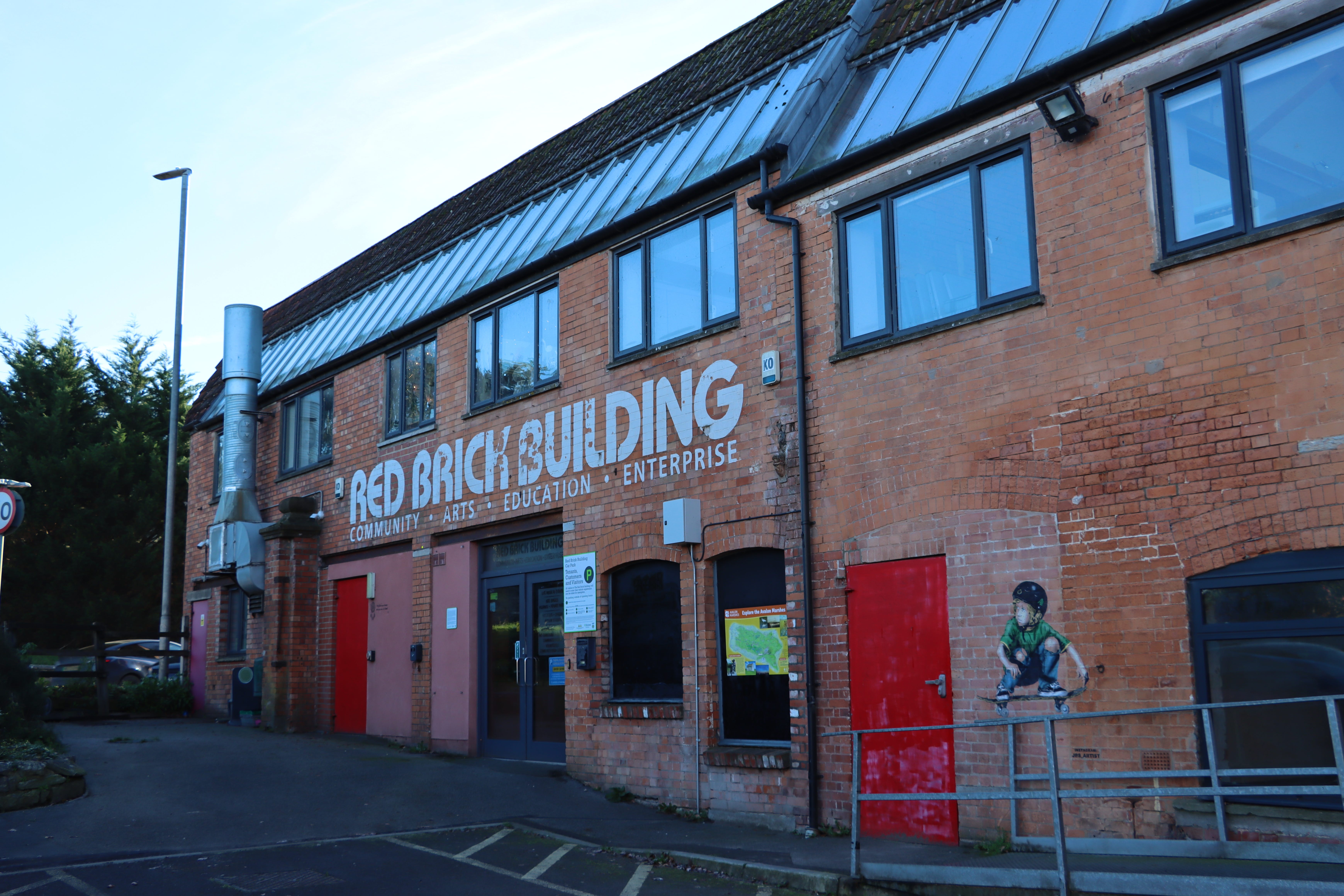
The Board’s statement also reflects on the impact of the project on the Board itself. They say: “The pressures created by the Life Factory project were huge. This was particularly evident during the prolonged and abrupt pause in funding while we conducted our own internal investigations and an external audit took place. Responsibility for this fell heavily on the Red Brick organisation. Staff time, board capacity, financial oversight, and operational resources were repeatedly diverted to support a project that was never designed or resourced to be absorbed into the core organisation.”
Elsewhere they note along similar lines: “Directors were required to navigate a highly complex grant programme well outside their usual remit, with minimal practical external support despite repeated requests for specific training and guidance.”
However the statement from the RBB also wants to make it clear that the only common link between the Life Factory project and the existing RBB community centre was a common board of directors. Day-to-day operations, staffing, and core community activity at the RBB were completely separate.
Some tenants have been sympathetic. One told the RBB “This isn’t about blaming those who stayed and tried to hold things together. It’s about recognising who paid the price when governance failed, communication broke down, and oversight didn’t intervene in time. The damage has been done quietly, to livelihoods and to a community.”
Some have been direct about what has happened: “The board members who presided over those decisions are no longer here. The people who instigated the initial split — at a time when funding was coming in and optimism was high — are gone too. What remains is a very small team of staff (who have been working there for years), and a tiny board, (who have only been in place for the last couple of years), trying quietly to salvage what they could. They have kept their heads down, not out of indifference, but out of fear of repercussions, wanting to salvage a positive outcome and maintain good relationships with all involved. They are not the villains in this story.”
But equally some tenants are concerned that, through no fault of their own, businesses are under threat and their community has been broken apart. As one put it: “For many of us, the Red Brick wasn’t an experiment or a side project. It was our working home.”
It is hard not to feel some sympathy for the RBB. It would be a terrible shame if the end product of a project meant to enhance the town of Glastonbury, ends up with the closure of a community asset which has been a standard bearer for what a community can do on its own initiative.
Glastonbury Town Council have already moved to pass a resolution to apply for Asset of Community Value status for both the Red Brick Building and Bridie’s Farm (the Glastonbury Food and Regenerative Farming Centre).
Will this give a way out, a possibility of avoiding closure? It is far too early to say.
We should also note that the Red Brick Building’s board is not a homogeneous and unchanging body. Clearly, the members of the board have changed over time. It may well be that those who made the decisions left the board before the chickens came home to roost.
It is not for us to point the finger at individual members of the board. We can only comment on the board as a collective body.
All of that said, we now have to acknowledge some uncomfortable facts.
The RBB did not have to do the Life Factory project.
The board may have found it too demanding, but perhaps that should have been anticipated?
The lack of financial control should have been obvious, even to a board unused to dealing with a complex project.
£2.3m of public money has been spent, and to all intents and purposes lost.
Any reservations that the RBB may have had about not coping, were not reflected to the board of the Glastonbury Town Deal. At least they were not recorded in the minutes of those meetings.
Meanwhile, Somerset Council is, as we have reported previously, looking at trying to recoup £2.3m from an organisation whose net assets were, the last time any accounts were filed, £350k.
Clearly Somerset Council will not get their money back. The question is, are they prepared to destroy a previously successful community enterprise on a matter of principle?
If you found this news release interesting, please share it with others so they can read it too:
With Christmas heading our way fast, why not gift a subscription as a present for a friend or family member? You can do that here:
Somerset Confidential® is a reader-supported publication. To receive new posts and support our work, consider becoming a free or paid subscriber.
I have no knowledge of any part of this project or the people involved apart from the light shone by your excellent articles . What cries out is a more general question: how can over £2million of public money be given to organisations and individuals where no-one has seemed able to take responsibility for controlling it? It almost doesn't matter if corruption or incompetence has been the main cause of this fiasco. What matters is that we appear to have no body in Somerset from the Council downwards who are fit to handle our money.
the hindsight in the Red Brick Building Centre Limited 's excuse note is not impartial and far from candid. There is no explanatoipn for the contiinuing lack of audited accounts or why the Board did not take action in December 2023 instead of hanginmg on until now?
The complete failure to put tiogether a credible business plan by the original board points to a copmlete failure to understand the commitments made by them to the Giovernm,entg under the Town deals scheme. This despite warnings gioven to the Chair and Treasurer..