
Somerset's HS2
HS2 is now running at double the original budget with delays of at least a decade. Somerset has a project that is doing much worse. And as the water rises again on the Levels it is no laughing matter.

Dear readers
Today’s edition is for all our readers. We hope you find it interesting. Every week we also offer at least one edition exclusive for our paying subscribers. We can only bring out the free edition because of their generosity.
If you’d like to join them and become a paying subscriber, you can do so here:
Thank you.
Andrew Lee - Editor
The context
As flood waters once again cover the Somerset Levels and residents complain that the response of the various bodies responsible have been too slow, memories of the floods of 2014 are resurfacing.


So let’s go back to 2014. A whole series of measures was to be put in place to prevent a recurrence of the catastrophic flooding that took place over the winter of 2013/14. These included more regular dredging, widening the river Sowy, building a bund near Thorney and raising the road between Muchelney and Drayton.
However, the flagship project to emerge from the devastation was the River Parratt Tidal Barrier.
A digression
On 14 January 2026 there was a warm reception for the Chancellor of the Exchequer’s plans to back Northern Powerhouse Rail (NPR) and specifically the new Birmingham–Manchester rail line. However, when Sam Gould, Director of Policy and External Affairs at the Institution of Civil Engineers said “it is vital that government and other stakeholders must learn the lessons from HS2”, he was speaking for many.
HS2 has become a byword for projects that lose control, not just of costs, but of project management as a whole. HS2’s original estimate was £37.5bn but, as costs escalated, later estimates for just Phase 1 had reached £61.8bn to £67bn and the overall project budget is now uncertain. As to delivery dates, the original 2033 is now out of sight and no new date has been set.
Government need not despair too much over its problems with HS2, because down here in Somerset, we have a project which makes a mere 100% budget overrun pale into insignificance.
By complete coincidence, the very next day (15 January) it too was in the news. We are talking about the Bridgwater Tidal Barrier.
It was in June 2014 as the flood water finally receded on the Somerset Levels, that David Cameron’s Government promised to deliver a new Thames barrier-style solution to protect homes in Bridgwater and the surrounding area from tidal floods on the River Parrett.
it would stop tidal surges going upriver and reduce flooding
That month, John Buttivant from the Environment Agency (EA) confirmed the project noting: “The idea is it would stop tidal surges going upriver and reduce flooding.”
More importantly, the EA estimated that the Bridgwater Tidal Barrier would cost between £27m and £30m. Not cheap, but not excessive either. The project would, they said, take three to five years to be ready for construction to begin and then a further five years to complete it.
By those estimates, the Bridgwater Tidal Barrier should have been completed between 2021 and 2024 at a cost of £30m or less.
Cost escalation
Five years later and there was no sign of the project being ready for the construction phase. In 2019 Government had only just managed to sign the Transport and Works Act Order to allow the preliminary work to start.
Speaking as the order was signed, Environment Secretary George Eustice said: “This is an important step forward in the delivery of one of the most complex and significant flood defences in the country. The £100 million Bridgwater Barrier is a significant investment in Somerset, protecting nearly 13,000 homes and helping unlock growth opportunities in the region.”
Hang on a minute, we thought. £100m… Where did that come from? And yes, it was true. By 2019 the cost of the project had more than trebled.
Which was nothing in the scheme of things because, as the production phase finally got underway in 2024, the cost had been re-estimated at £249m.
nine times the original estimate
That is nine times the original estimate. Certainly it is not a project on the scale of HS2, but the cost overruns as a percentage of the project are far in excess of anything HS2 managed.
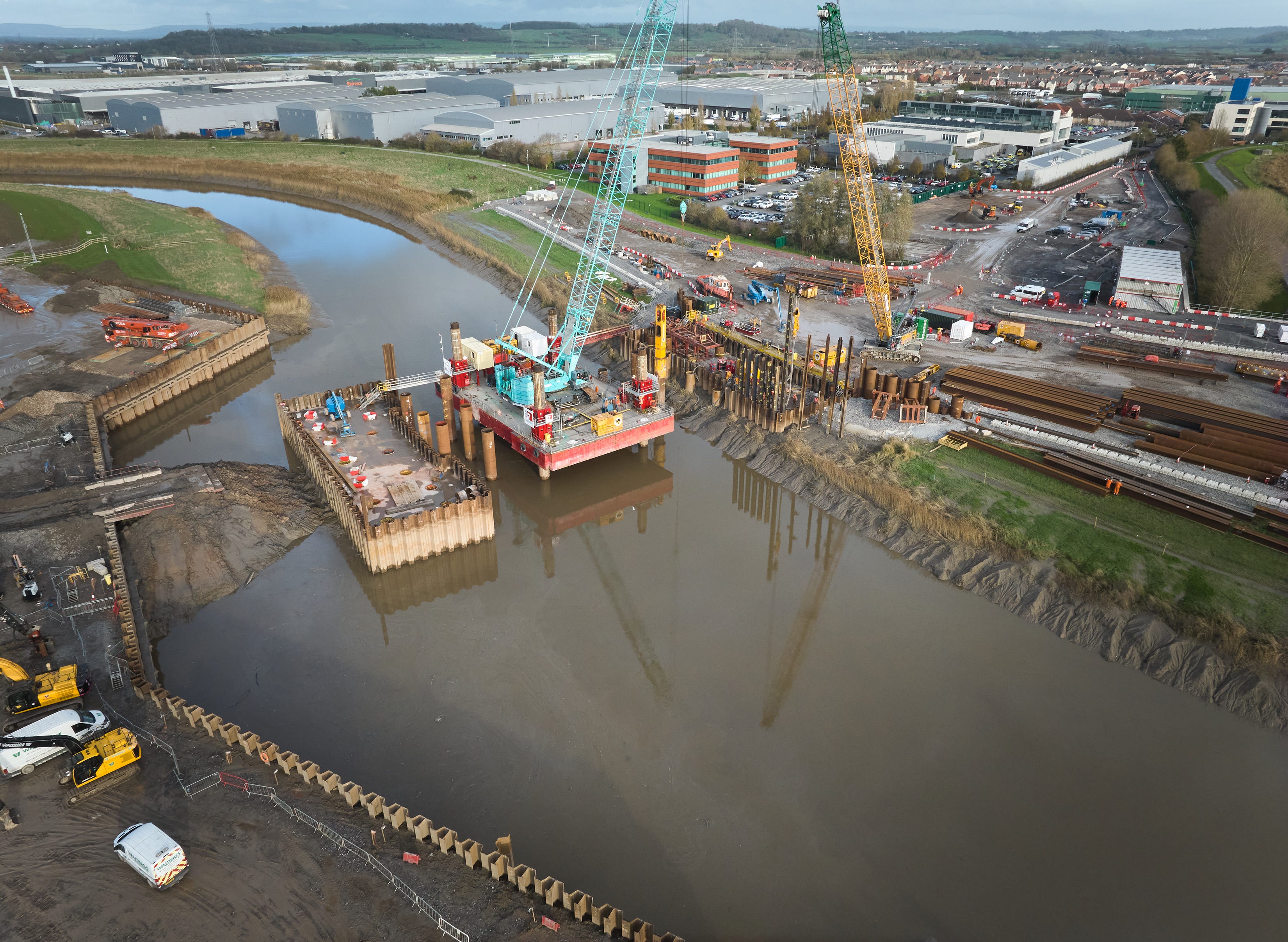
Which brings us to the latest news on the project. The EA, who have neither apologised for nor sought to explain the reasons for the dramatic cost overruns, are about to undertake what they describe as “a design efficiency review”.
The purpose of the review is to ensure that, in their words, the project: “continues cost-effective delivery without compromising outcomes while maintaining construction progress.”
What does this mean in ordinary English?
The scope of the project is not changed. The core purpose of the Bridgwater Tidal Barrier scheme, protecting 12,800 homes, businesses and vital infrastructure from tidal flooding, remains unchanged.
The central purpose of the review appears to to design cost out of the project. Which is certainly commendable. However, you may not be surprised to learn that there is no figure mentioned at this juncture for the total cost of the project. Instead the EA say: “The final cost will be confirmed once the review is complete and will be published after it has been through standard government reporting.”
The final cost will be confirmed once the review is complete
With no actual numbers available, we are left to guess what is happening. But it is not hard to see. Clearly, the costs have continued to accelerate ahead of the latest approved budget of £249m. It seems likely that the review now being undertaken is to bring the costs back to the £249m without compromising the scope of the project.
Cutting back?
It would be nice to think that someone in the EA (or Government) might think about cost engineering the project back to closer to the £100m budget of 2019. But it is hard to escape the impression that because £249m had been allocated, £249m will be spent.
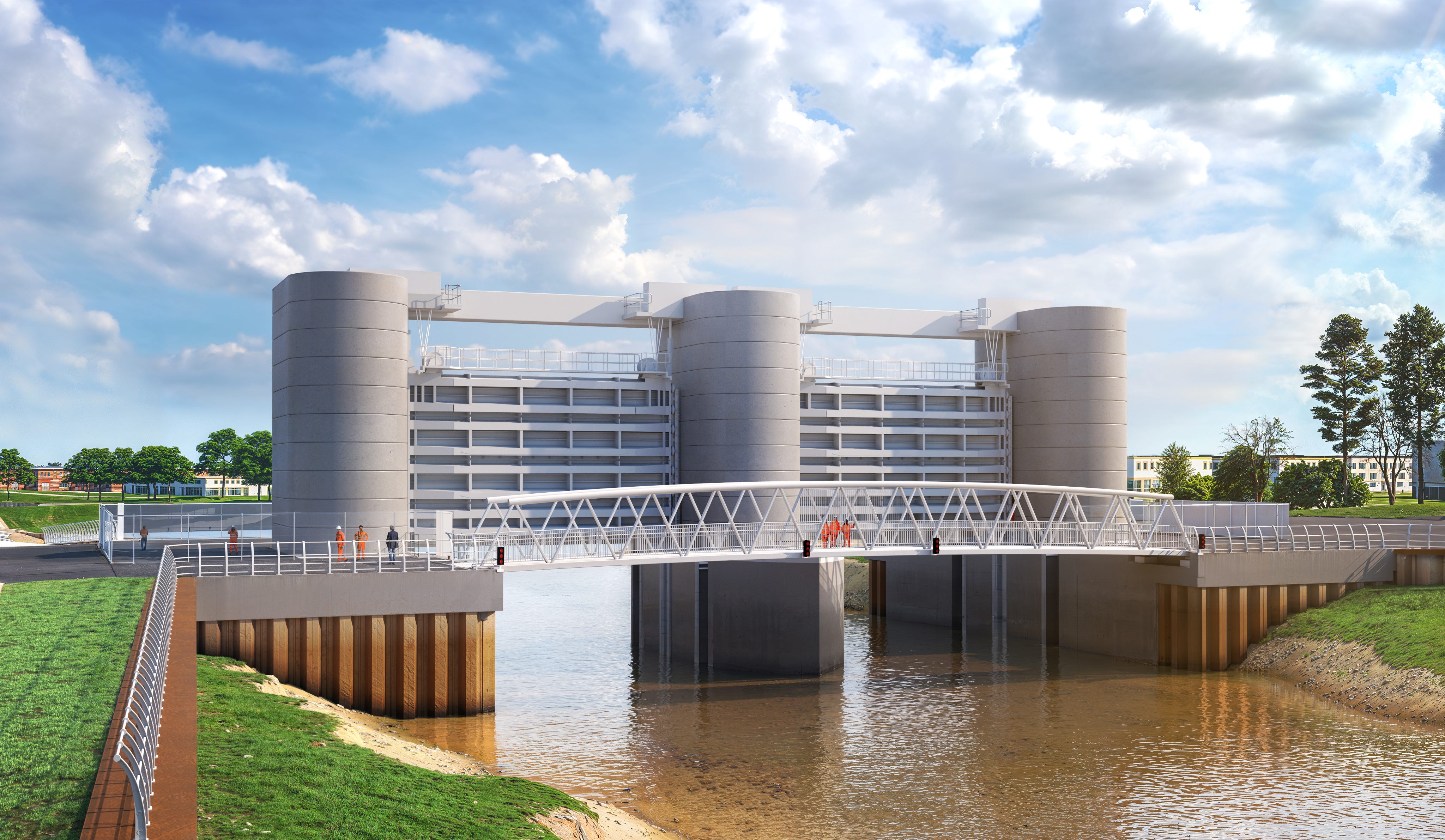
The EA say that the changes they have identified to date are to the tidal barrier superstructure and will allow: “the use of more modern methods of technology and construction, which will reduce costs.”
Key refinements include:
A 10-metre reduction in overall height: the three towers will now be approximately 13m high.
Streamlined, more uniform tower shapes with more modern mechanical systems.
Relocation of the drive equipment (that moves the barrier gates) to the base of the towers, making easier and safer access for maintenance, while reducing long-term operating costs.
Lighter, high-level walkways in place of the former overbridge, providing operational access between the towers.
Needless to say we got in touch with the EA to ask about the escalating costs, especially against their own initial estimates. We asked them: “Can we have a comment from the EA as to why the cost estimates given and completion date in 2014 have proved to be so inaccurate. Indeed should the degree of overrun call the whole project into question?”
By way of response an EA spokesperson told us: “The Bridgwater Tidal Barrier will continue to offer the same level of flood protection as planned via a more cost-effective design. The design efficiency review is to ensure the scheme remains affordable and sustainable and to ensure ongoing value for money with public funds. The priority is to make the barrier operational as soon as possible so flood protection is available to Bridgwater and the surrounding areas. Construction is well underway.”
We’ll leave our readers to decide if that answered the question we actually asked.
Context again
But let us return to where we started. The Levels are under water again. Just yesterday morning (28 January 2026) our editor was informed that all the emergency services were on standby and that the fire brigade were stood ready to help with evacuations. The message was this: everything is under control.
Well, as much as it can be when coping with nature.
Nevertheless, it is also a fact that complaints are rife and people are scared. More houses have flooded in Taunton, which got off relatively lightly in 2014. Why is that?
Many of the complaints are the same ones we heard in 2014. Why were the pumps not started until it was too late? Why was the Dunball sluice not opened earlier? Has the dredging programme been sufficient and in the right places?
Whatever the rights and wrongs of those complaints, the fact that they are being made reflects the very real fear that people have as the water rises and comes closer to their homes. Needless to say the various services are working as hard as they can to help. At least this time around they appear to be talking to each other.
a much bigger question to answer
But there’s now a much bigger question to answer. If we knew that we had £249m to spend on preventing flooding on the Somerset Levels, are there better things it could have been spent on than the Bridgwater Tidal Barrier? Including measures to protect Bridgwater in the absence of a barrier.
Because all we know so far is that in 12 years, very little has happened to the project apart from a truly astonishing escalation in costs.
We are not answering the question because we are not qualified to do so. What we are qualified to do is to ask it and demand that it is properly considered and answered.
Because the people who live on the Levels, and in Bridgwater, Yeovil, Chard, Ilminster or in Taunton, deserve an answer.
If you found this news release interesting, please share it with others so they can read it too:
Why not gift a subscription as a present for a friend or family member? You can do that here:
Somerset Confidential® is a reader-supported publication. To receive new posts and support our work, consider becoming a free or paid subscriber.
How do we begin at 30mil and end up at 249mil? And 12 years later? And f-all done?
Broken Britain is a cliche and a joke. We are surrounded by incompetence and us mugs are paying for it.
I was just about to write the same thing, after I’d calmed down from reading the suggestion that we should all be sacrificed.
You are right about run off from bad agricultural practices, especially from the maize fields which, after harvesting, leave the fields like ‘car parks’ as the EA said to me, meaning compounded by the harvesting late in the year. And full of debris.
When it rains, the River Tone turns orange from all of the run off and every year a huge amount of silt builds up.
Historically, the rivers were dredged every year but that stopped years ago. And the EA hasn’t cleared the weeds which enlarge the banks and create islands narrowing the river to such an extent that cattle can walk across the river.
Add to that the housing developments on flood plains with no or little soft landscaping and all their sewerage running jnto the system. And often built on former flood plains.
There’s a government database of permitted development on the floodplain against EA advice - there are thousands.